








Talking about armed violence is not easy — especially in communities where it is so common that it can start to feel like a fact of life. Yet young people are stepping forward to lead this urgent conversation, determined to protect themselves and those people they care about.
In many places, including where I grew up, the sound of gunfire is not unusual. Living with that reality leaves lasting marks on children and young people who are forced to witness fear and loss. That is why disarmament is not only about weapons; it is also about mental health, community care and human rights.
As I became more involved in this work, I began to explore the connections between armed violence and psychological well-being, between militarization and development, and between weapons and dreams that never get the chance to come true . I realized that what I was learning needed to be shared. Millions of children and young people share a stake in this issue, and in difficult times we must create spaces where we can raise our voices.
Disarmament through Art and Dialogue
That conviction is what gave rise to “Creative Disarmament” — a series of workshops and participatory activities designed to open difficult conversations through art, dialogue and community action. At its heart is a simple belief: building peace means bringing together our voices, knowledge and lived experiences, in our own languages and in ways that feel accessible.
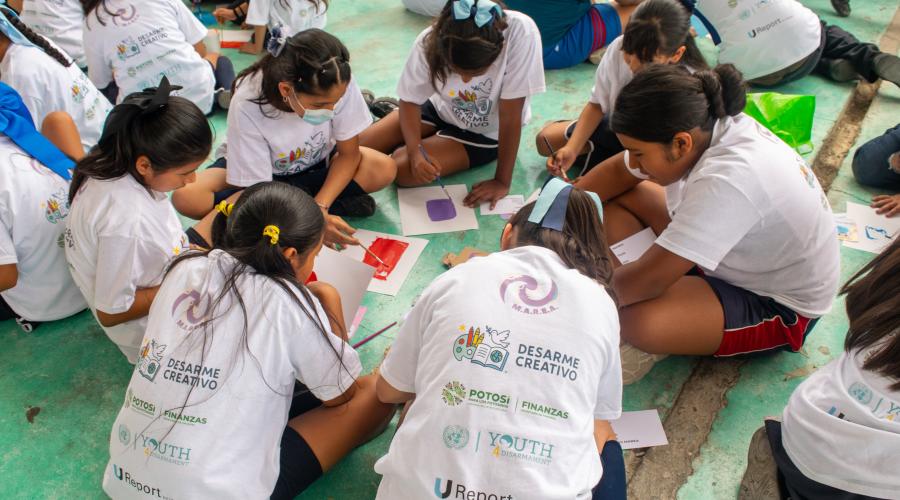
We implemented the initiative in three Mexican states: San Luis Potosí, Hidalgo and Puebla. In each place, we created spaces for dialogue where emotions and ideas could lead. We painted, played, wrote, folded origami cranes, created murals and listened to survivor testimonies. Above all, we asked children a question they are rarely asked: “How can we change the world?”
The most important step comes next: helping to amplify young people’s ideas and carry their proposals into global decision-making spaces — both global forums and public venues such as museums.
Approaching disarmament as a local issue in rural, urban and indigenous communities
In Ciudad Valles, San Luis Potosí, we held a workshop with more than 160 children. Despite initial reactions — from parts of the press and others — were dismissive. We responded by defending children’s right to speak about disarmament, and to do so through art. What emerged was powerful. Across their drawings and messages, one theme was unmistakable: “Without weapons, there wouldn’t be as much danger or death.”
We concluded the process with an exhibition at the Julián Carrillo Cultural Center, followed by a press conference with institutional allies, including the State Government and the Ministry of Finance of San Luis Potosí. We were also joined by partners from U-Report, UNICEF’s global youth engagement platform.
In Pachuca, Hidalgo, I returned to the school where I studied and where my activism began. More than 80 children and adolescents reflected on violence and what it takes to create safe spaces — from the classroom to the street. Inspired by the stories of hibakusha, including the atomic bomb survivor Sadako Sasaki, we explored peace and nuclear disarmament by making paper cranes. The activity reminded us that no issue is too complex or distant when approached with respect and genuine listening.
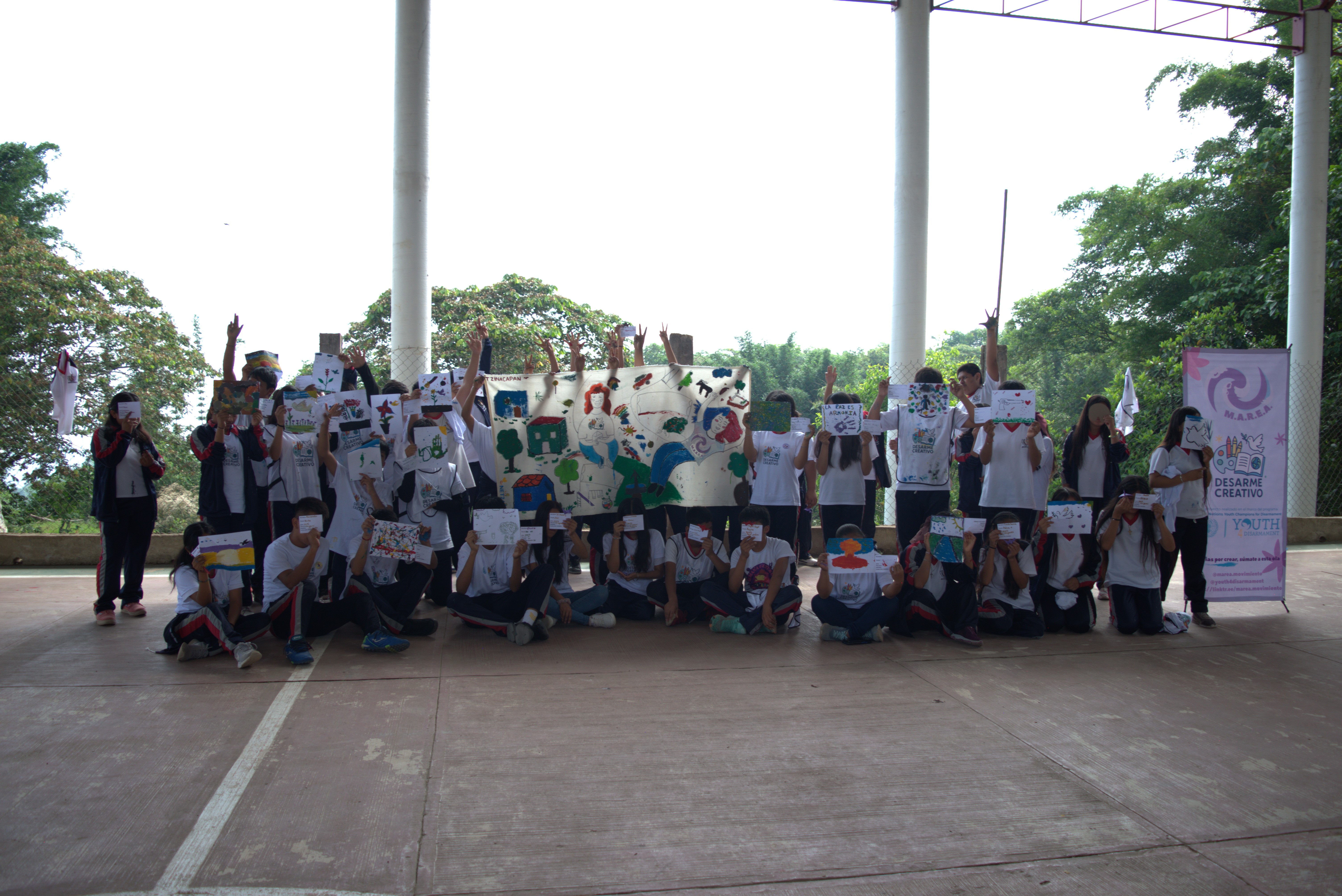
In San Miguel Tzinacapan, Puebla, a Masehual community in the Sierra Norte, we worked with more than 115 high school students. We listened to their experiences of how militarization affects the environment, and we reflected together on how art can support healing. We closed with an exhibition at the Regional Museum of Cuetzalan — an act of collective memory and dignity.
What Creative Disarmament taught us
Creative Disarmament reinforced that there is no minimum age to speak about justice. Young people do not need permission to create change; we are already leading from our own spaces. The project also reminded us that communities hold deep knowledge of their realities, and that the role of facilitators is to accompany them — with empathy, information and sensitivity while staying open to learning and building knowledge together.
We also faced challenges: finding funding and strategic allies; overcoming institutional resistance to conversations about disarmament; confronting prejudice against young women’s leadership; and addressing doubts about whether art can engage issues this complex. Logistical hurdles — such as traveling with our team to remote areas — added another layer of difficulty. Still, the results were visible in the faces we saw in each workshop, in the words participants shared, and in the partnerships we built step by step. It was not only possible — it was necessary.
Creative Disarmament is a bold effort to question the armed violence that so many communities live with but rarely feel able to address. It is a creative attempt to challenge inequality and to reaffirm a simple truth: children and young people already have what it takes to build a more peaceful and just world.
Our dream is that every piece of art created in these workshops will travel, inspire and spark change. That is why we are developing a digital museum to gather all the artwork produced through the project.
As long as there is a child who deserves to live without fear, as long as there is a young person asking how to change things, and as long as there are people willing to imagine a future without weapons, we will move forward together to make that future real.
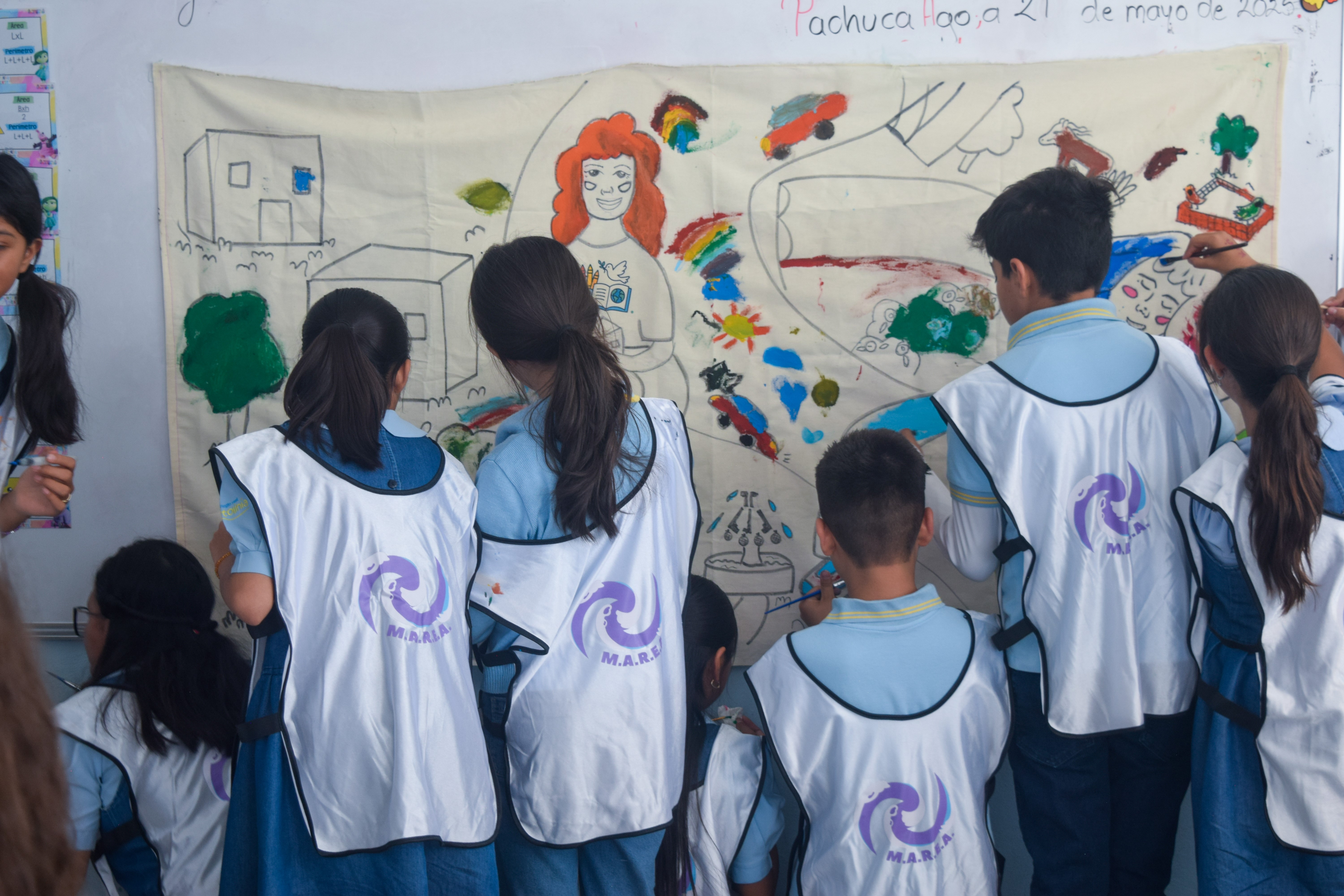
Desarme Creativo was made possible by a multi-disciplinary team that worked with soul, mind, and an open heart, placing their trust in a disruptive and deeply human project. Deepest gratitude to Kevin Espíndola Bravo, Yuridia Paola Moreno Ortiz, Ethel Yalani Balderas Acosta, Yatzi Yatzna Cortés León, Nancy Itzai Vargas López, Sergio Kevin Pliego Ramos, Luis Alejandro Ibarra del Ángel, Janet Monserrat Carmona Flores, and Itzel Guadalupe Soto Gutiérrez.